
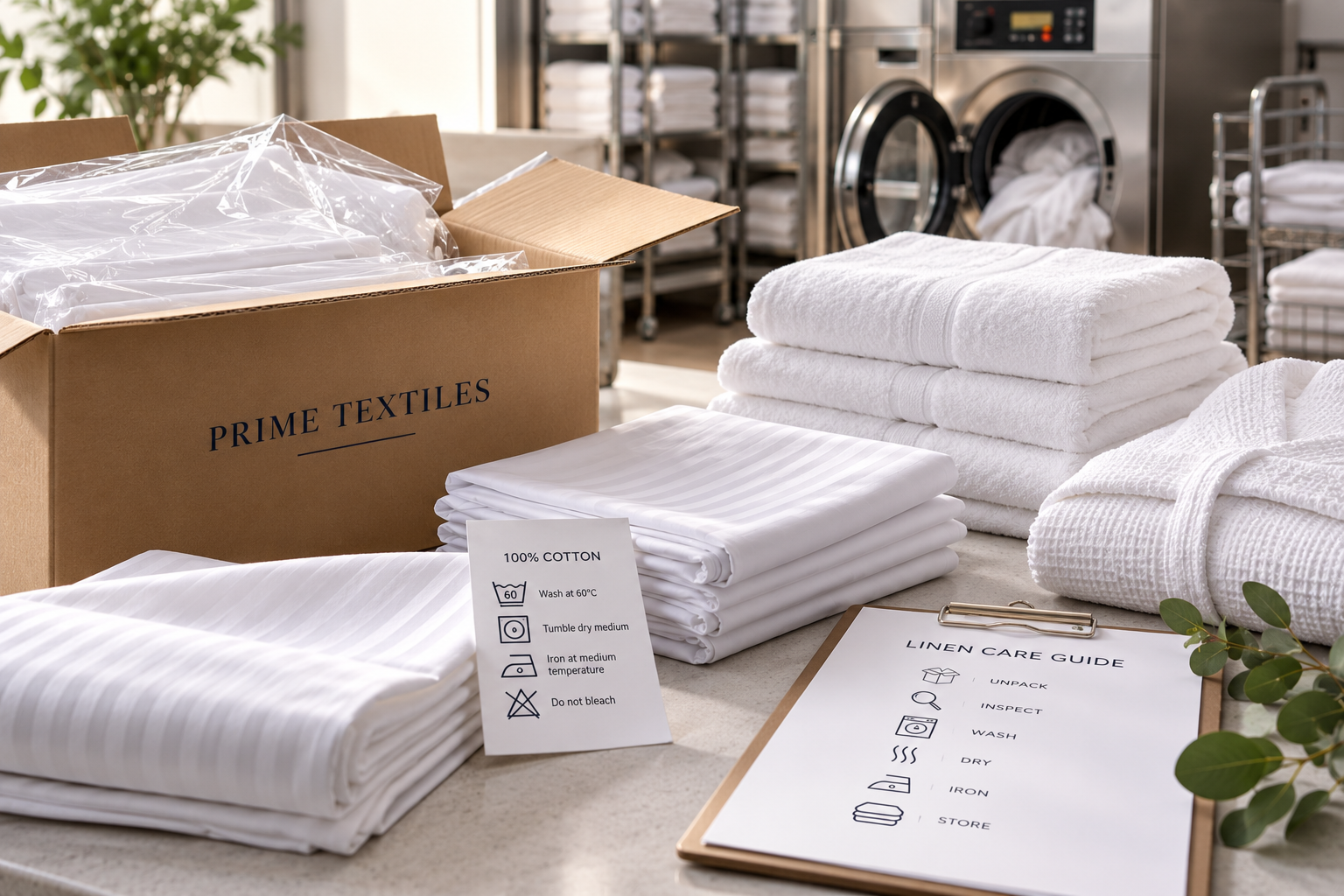
Professional guidelines from Prime Textiles
Hotel Linen Care Manual
Professional guidelines for new hotel textiles — how to receive, wash, dry, inspect and store your hotel linen so it keeps its appearance, comfort and service life.
1. Receiving and Unpacking New Textiles
Proper handling begins as soon as your hotel linen arrives.
- Inspect the packaging for moisture, damage, dust or signs of contamination.
- Check the delivery against the order and separate products by type, size, colour and intended use.
- Open packages in a clean, dry area using scissors carefully to avoid cutting or damaging the fabric.
- Remove all packaging materials, labels and loose threads that are not part of the product.
- Do not place unpacked linen directly on the floor or on unclean surfaces.
- Store textiles in a clean, dry, well-ventilated room until they are ready for processing.
Important: If textiles arrive wet, visibly contaminated or with an unusual odour, isolate them and investigate before use.
2. Inspect Before the First Wash
Before laundering, check the product label and the manufacturer's care instructions.
- Identify the fibre composition, colour and recommended washing temperature.
- Separate whites, light colours, dark colours and coloured decorative items.
- Check for manufacturing residues, stains, loose stitching or damaged seams.
- Keep towels, bed linen, bathrobes and table linen in separate loads where practical.
- Confirm that the laundry equipment, water supply and detergent-dosing systems are clean and operating correctly.
3. First Wash of New Hotel Linen
For most washable hotel textiles, a first wash helps remove manufacturing residues and prepares the products for use.
- 1. Follow the care label and supplier's washing instructions.
- 2. Use a suitable commercial detergent at the correct dosage for the water hardness and soil level.
- 3. Avoid overloading washing machines; textiles need sufficient space for effective washing and rinsing.
- 4. Use a suitable wash programme for the fibre, colour and product type.
- 5. Avoid unnecessary bleach, excessive chemicals or fabric softeners that may affect absorbency or fabric performance.
- 6. Inspect the textiles after washing and rinsing before proceeding to drying and finishing.
Note: Not every textile requires the same temperature or washing process. Decorative fabrics, coloured textiles and specialist finishes may need different treatment.
4. Drying and Finishing
- Follow the care label for tumble-drying temperature or line-drying instructions.
- Avoid excessive heat, which can cause shrinkage, fibre damage or reduced product life.
- Remove textiles promptly when the drying cycle is complete.
- Ensure linen is completely dry before folding and storage.
- Use suitable ironing, pressing or calendaring settings for the textile construction.
- Inspect finished products for stains, damage, lint and remaining moisture.
5. Quality Control Before Guest Use
Before sending textiles to guest rooms, check that they are:
- Clean and free from visible stains.
- Completely dry and free from musty odours.
- Properly finished and neatly folded.
- Free from tears, loose seams or other damage.
- Stored and transported in a way that protects them from contamination.
Any item that fails inspection should be separated for reprocessing or repair.
6. Storage and Handling
- Store clean linen in a clean, dry and ventilated area.
- Keep linen off the floor and protected from dust, moisture and chemicals.
- Separate clean textiles from used linen and laundry waste.
- Use a stock rotation system so older batches are used first.
- Avoid compressing linen excessively for long periods.
- Keep storage shelves and linen carts clean.
7. Protecting Your Investment
Correct laundering and handling help preserve the appearance, comfort and service life of hotel bed linen, towels, bathrobes and table linen.
- Train laundry staff to follow consistent procedures, record washing settings and chemical dosages, and report recurring stains, discolouration or unusual fabric damage promptly.
Prime Textiles Recommendation
Every hotel should establish a textile-care procedure based on the actual product specifications, manufacturer's instructions, laundry equipment and local hygiene requirements.
When in doubt, consult your textile supplier and professional laundry technician before changing the washing process.
Prime Textiles — Your partner in professional hotel textiles.